



Minimally invasive implant surgery
Dear patients,
For a better understanding please read the chapter Implants first
A brief warning!
This chapter contains pictures of implant operations.
As a precaution, the pictures are in black and white and only the surgery of a single implant is presented.
If the sight of blood or surgical procedures makes you feel uncomfortable, you should not read any further.
Implant surgery = pain?
Implants are artificial tooth roots, usually made of titanium, which are surgically inserted into the jawbone and provided with dentures after a healing period of 6 to 12 weeks.
The standard implant surgery
The standard implant surgery is performed by one vertical and two horizontal incisions in the gingiva with a scalpel followed by separation of the gingiva from the jawbone with a raspatory to achieve a sufficient view over the surgical area.
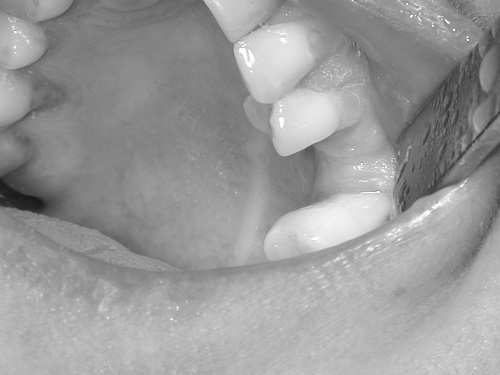
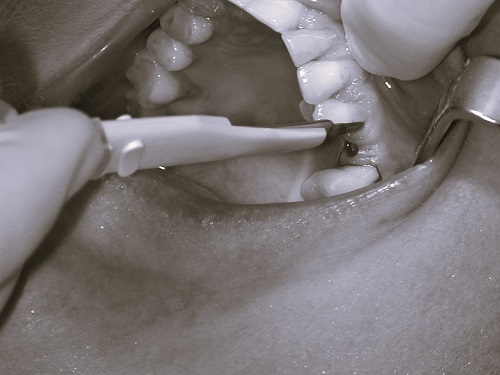
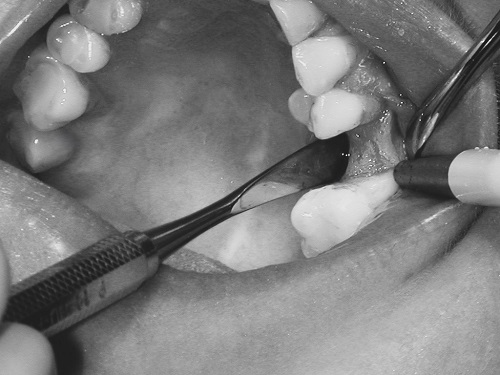
Then a hole is drilled into the jawbone with surgical burs, the matching implant is inserted and finally the gingiva flaps are sewn back together.
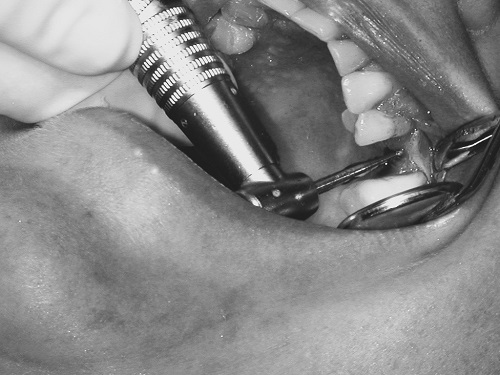
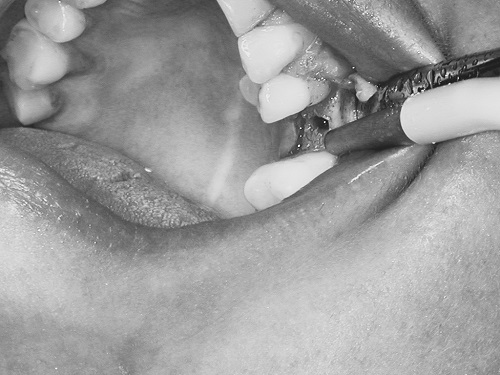
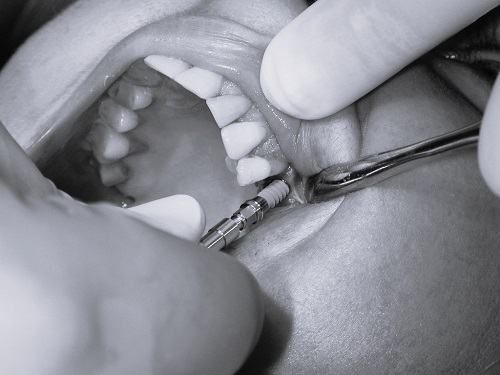
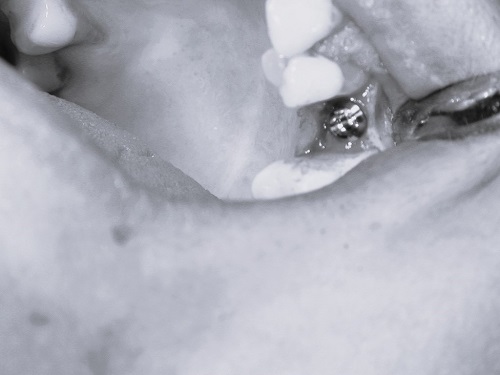
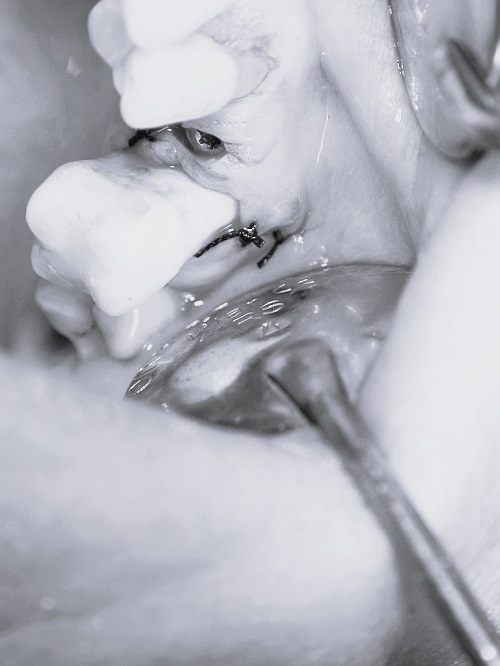
This results in a quite large surgical wound, especially when multiple implants are inserted, with the risk of infection or early loss of the sutures and in many cases followed by pain and swelling.
Minimally invasive implant surgery
The minimally invasive implant surgery demands a high level of expertise and decades of experience.
Instead of large incisions into the gingiva followed by its extensive separation from the jawbone only a few square millimeters, less than the diameter of the implant, are removed with a small surgical punch
Then a hole is drilled into the bone and finally the matching implant is inserted, completely closing the surgical wound.
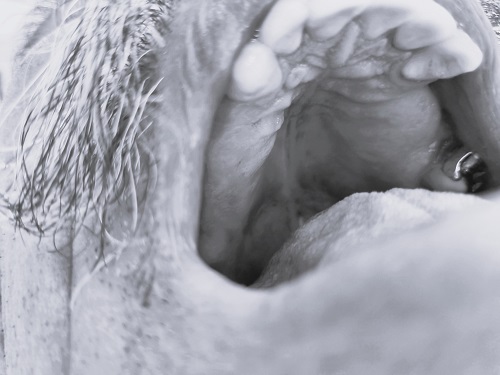
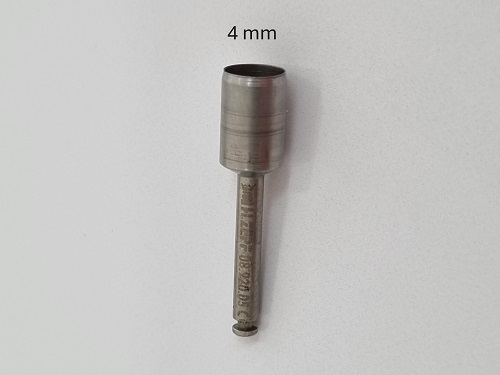
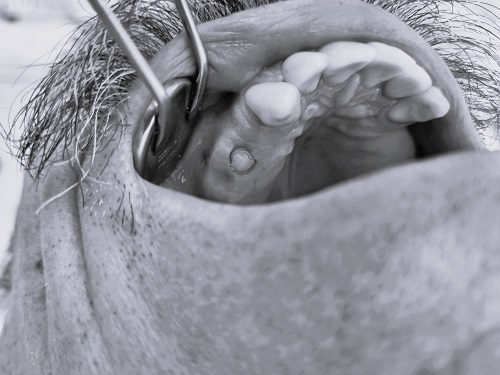
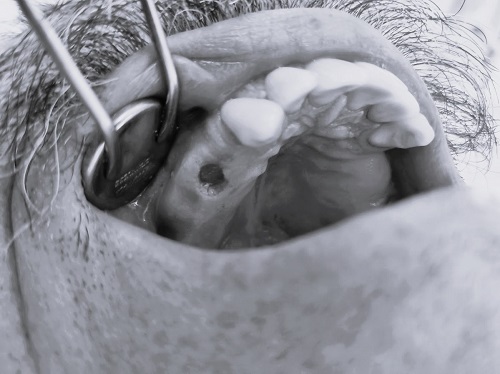
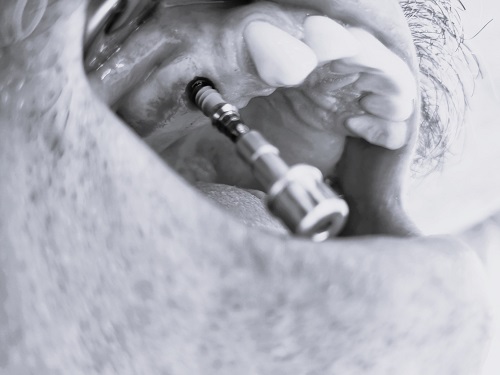
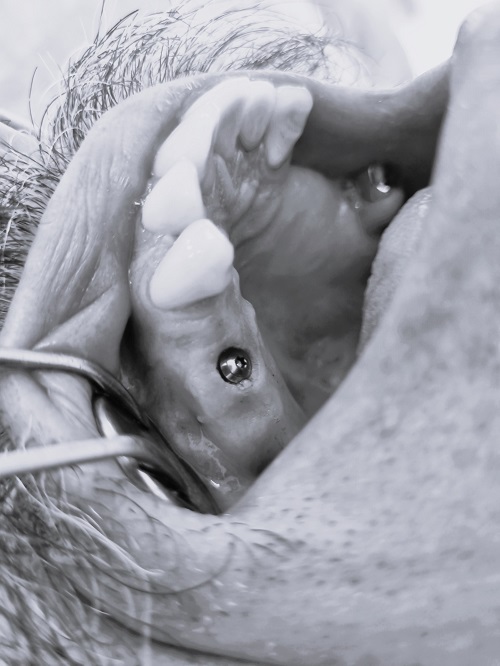
The surgery rarely takes longer than 10 to 15 minutes per implant and due to the absence of a surgical wound, no sutures are required and pain or swelling hardly ever occurs.
Thanks to 30 years of implant surgery with thousands of inserted implants, I can perform the minimally invasive implant surgery completely painless or in the rarest of cases with barely noticeable postoperative swelling and pain.